
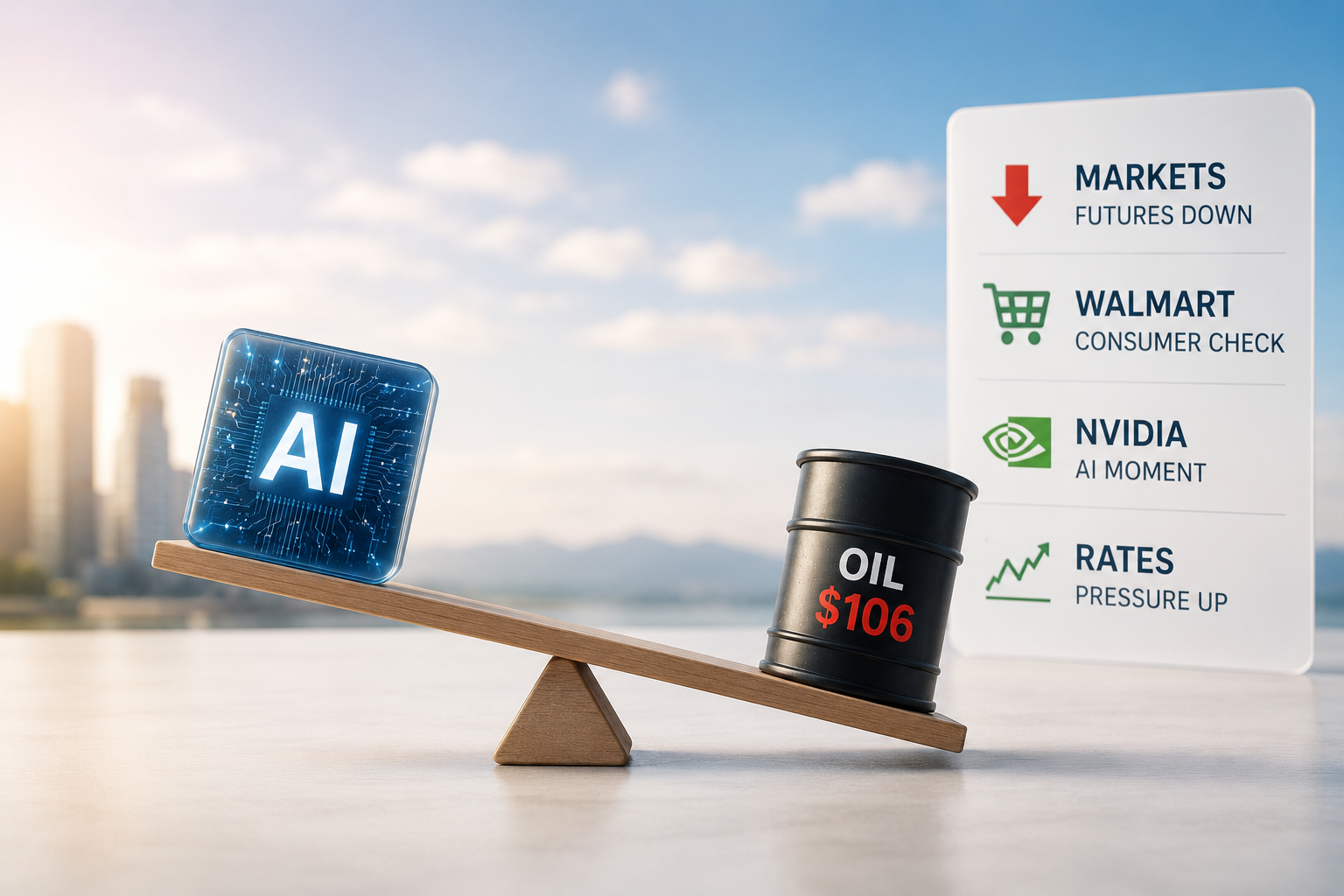
Monday’s open had a familiar split-screen feel. U.S. futures were in the red — the Dow indicated down about 270 points, the S&P off 16, the Nasdaq off 21 — even as the broader story of 2026 keeps coming back to one question: can the optimism around AI keep outrunning the pressure from higher rates, higher oil, and a stretched consumer?
That’s the framing CNBC’s morning panel kept returning to: AI versus affordability. And this week, the affordability side has a lot of fresh ammunition.
The pressure points
The most obvious one is oil. With the war in Iran now nearing three months, energy just finished its best week since late 2024, and WTI crude is trading around $106. The longer prices stay elevated, the more the bond market starts pricing in a higher-inflation world — and that’s exactly what’s been happening. The U.S. 10-year Treasury closed last week at its highest yield in roughly a year, sitting near 4.5%. And the move isn’t just a U.S. story: Japan’s 30-year government bond is yielding at levels not seen since 1999.
For retail investors, the takeaway is that equity markets haven’t fully absorbed what the bond market seems to be saying. As one panelist put it, the inflation reality emanating from energy is colliding in real time with the AI productivity narrative — and which side wins out may shape the rest of the year.
Why Walmart matters more than usual
Inside the affordability story, the most-watched data point this week may not be the Fed or even Nvidia — it’s Walmart. Several panelists called the retailer the single best barometer for the slice of the economy they’re most worried about: the lower-wage consumer in a K-shaped economy.
The questions they’re asking when earnings drop are pretty consistent. Are baskets getting smaller? Are shoppers trading down from discretionary “fun” items to essentials? Are any cracks showing up in spending patterns at the low end of the income spectrum? If the answer is “yes,” it doesn’t necessarily break the bull case for stocks, but it makes the inflation-and-rates side of the tug-of-war a lot harder to ignore.
The labor market and manufacturing data have, so far, held up remarkably well — which is part of what’s keeping the Fed pinned. But it’s the consumer, not the factory, that’s most exposed to the squeeze from energy and sticky inflation. That’s why retail earnings are the real tell this week.
The other side: AI is still the long story
The counterweight, of course, is artificial intelligence — and the panel was clear that for long-term investors, geopolitical noise and rate volatility can become an opportunity rather than a reason to retreat. The framing one panelist used: we’re in year three of an eight- to ten-year AI buildout. “Liberation Day,” tariffs, even the Iran conflict — those have all been chances to buy, not bail.
That long view will get a near-term reality check this week when Nvidia reports earnings. Few single prints carry more signal about the health of the AI capex cycle, and the read-through will likely shape sentiment on chips, hyperscalers, and the broader productivity story.
The wrinkle, as one panelist noted, is that long-term productivity gains from AI would typically push interest rates higher in the near term — and rates are already high. That’s the heart of the tug-of-war: even the bullish case for AI doesn’t argue for an easy ride.
One stock-specific gut punch
Outside the macro debate, Regeneron is the name to know Monday morning. A late-stage trial of its experimental skin-cancer treatment missed its main goal of improving survival without disease progression for patients with advanced melanoma, and shares are down about 10% pre-market. It’s a sharp reminder that even in a market dominated by macro tug-of-war, single-name biotech catalysts can still move the tape on their own.
What to watch this week
For retail investors trying to read the week, three signals matter most.
Walmart’s report will tell you where the consumer actually is — not where surveys say they are. Nvidia’s print will say whether the AI capex story is still accelerating. And the 10-year yield will quietly arbitrate the fight between the two: if it keeps climbing, affordability is winning.
It’s a setup that rewards staying invested in the long-term AI thesis without ignoring what the bond market is trying to say.