
If you’re hitting the road or the airport this Memorial Day weekend, you’ve probably already noticed that the trip costs more than it did last year. Significantly more. That’s not your imagination, and it’s not one thing — it’s a pile-up of price increases across basically every category of travel that has been building since the Iran conflict began driving energy costs higher.
Here’s what the numbers actually look like, and what you can do about it.
The Price of Getting There
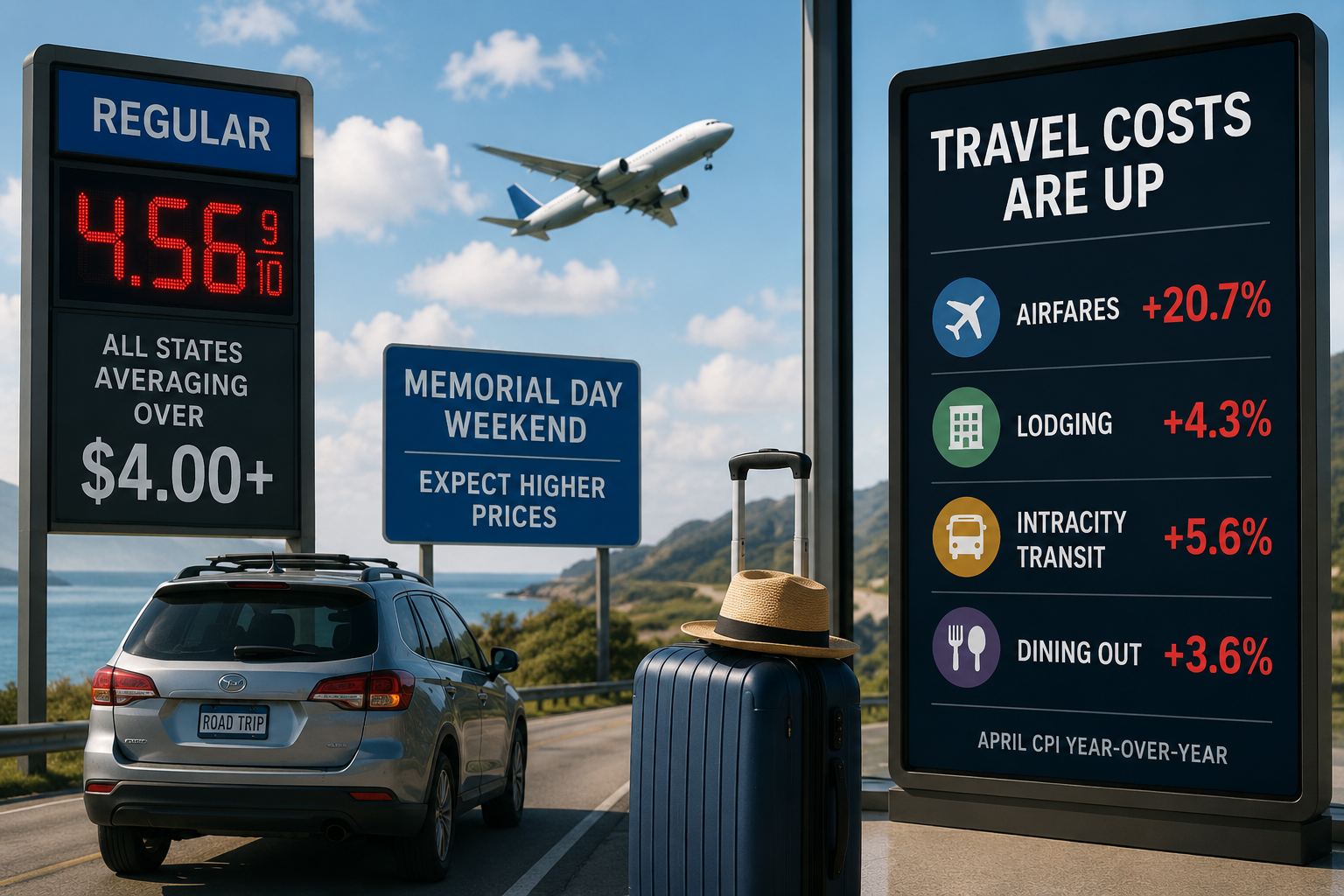
Let’s start with gasoline, because it’s the most visible number and the most politically charged. The national average for regular unleaded hit $4.56 per gallon on Thursday — up from $3.18 a year ago, a 43% increase in twelve months. Every single U.S. state now averages above $4 per gallon, which hasn’t happened since 2022. The nonprofit Institute on Taxation and Economic Policy estimates that Americans will collectively spend an extra $3.5 billion on gasoline this weekend alone compared to what they would have spent at last year’s prices.
If you’re flying instead of driving, the math isn’t any better. Airfares rose 20.7% year-over-year according to April’s Consumer Price Index report — the same report that put overall inflation at 3.8%, the hottest reading since May 2023. That’s not a rounding error. A domestic round trip that cost you $400 last Memorial Day might cost you close to $500 this year on the same route.
The full cost-of-travel picture from the April CPI: lodging is up 4.3%, intracity transit (buses, subways) is up 5.6%, and dining out is up 3.6%. There is essentially no category of travel spending that is flat or down.
Why Consumers Are Still Going Anyway
Despite all of this, roughly 45 million Americans are expected to travel at least 50 miles from home between now and Monday, according to AAA. That’s a figure in line with pre-pandemic Memorial Day travel — demand hasn’t collapsed.
What’s changed is the shape of the trip. Surveys show travelers are replacing multi-week vacations with long weekends, choosing destinations within driving distance instead of flying, and cutting costs on the edges — cooking more meals, using transit instead of renting a car, staying with family. The University of Michigan’s consumer sentiment index just printed at 48.2 in its preliminary May reading — a record low since the survey began in 1952 — and roughly one in three respondents spontaneously cited gas prices as a source of financial stress. People are still spending, but they’re grinding their teeth while doing it.
What You Can Actually Do
The macro situation isn’t going to resolve itself this weekend. But there are some practical ways to manage the damage.
On gas: GasBuddy and AAA’s gas price tracker let you find the cheapest stations along your specific route, not just the national average. A $0.20/gallon difference sounds trivial, but on a road trip that burns 30 gallons it’s $6 — and those differences exist, especially if you’re flexible about which exit you stop at. If your car takes regular and it’s been a while since you checked, verify it — some drivers unnecessarily pay for premium. Also, highway speeds above 65–70 mph meaningfully reduce fuel economy on most vehicles; slowing down slightly on long drives is one of the few free interventions that actually works.
On flights: If you haven’t booked yet, you’re probably not going anywhere for Memorial Day weekend at this point without paying peak prices. But if you’re planning summer travel, Tuesday and Wednesday departures tend to be the cheapest days to fly, and booking at least 3–4 weeks out still makes a meaningful difference. The 20.7% airfare increase is a trailing 12-month average — there’s wide variance by route, and some markets are worse than others.
On lodging: The 4.3% lodging increase is the most manageable of the bunch. Hotel rates respond to demand in real time, and last-minute availability on a Friday night still exists in many markets. Apps like HotelTonight specialize in same-day and next-day inventory that properties discount to fill. If you’re flexible on location within a metro area, prices can vary significantly by neighborhood.
On the broader budget: This is a reasonable moment to look at your summer spending plan with fresh eyes. If you’ve been carrying a balance on a variable-rate credit card, the Fed’s current 3.50–3.75% benchmark rate — and the uncertainty about whether new Fed Chair Kevin Warsh moves it higher — means that balance is expensive and likely to stay that way. Prioritizing paydown over discretionary spending isn’t exciting advice, but a 3.8% inflation environment that may not cool quickly makes it relevant.
The Bigger Picture
The Memorial Day price surge isn’t happening in isolation. It’s the retail-level expression of the same macro forces that have been driving equity market volatility all week: crude oil back above $100 per barrel, yields at their highest in more than a year, and a new Fed Chair taking the helm with no track record yet in this role.
For consumers, that means the cost-of-living pressure that started with tariff headlines and escalated with the Iran conflict isn’t a short-term blip. It’s the backdrop for at least the next few months. Planning around that reality — being intentional about where the discretionary dollars go — is the most useful financial move available right now.
Enjoy the weekend. Just know what it actually costs.