
Retail activity on the XRP Ledger is drying up fast—but that may be exactly the point.
According to new on-chain data from Glassnode, daily XRP address creation has collapsed from roughly 18,000 in late 2024 to just over 5,000 today, while monthly active XRP supply has fallen more than 70%. On the surface, the data looks bearish. Retail speculation is fading, trading activity is cooling, and the explosive momentum from the last cycle has largely disappeared.
But beneath the declining wallet activity, something much bigger may be emerging.
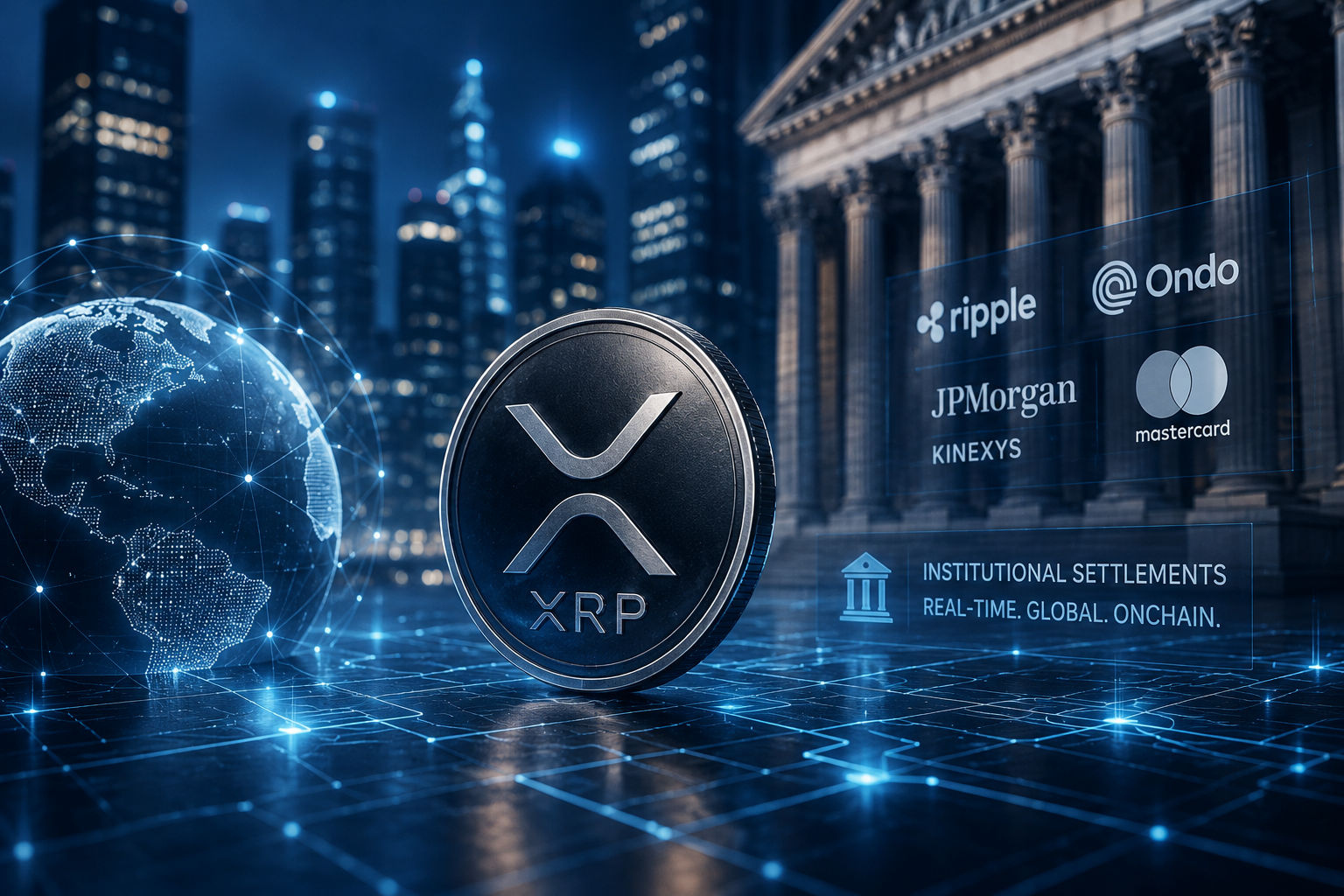
This week, Ripple, Ondo Finance, JPMorgan’s Kinexys platform, and Mastercard completed a real-time cross-border settlement pilot involving tokenized U.S. Treasuries on the XRP Ledger. The transaction connected public blockchain infrastructure directly to institutional banking rails—settling outside traditional banking hours and bridging tokenized assets with real-world dollar liquidity.
That’s not meme-coin behavior. That’s financial plumbing.
The transaction worked like this: Ondo processed the redemption of tokenized Treasuries on XRPL, Mastercard routed settlement instructions through its Multi-Token Network, and JPMorgan ultimately delivered U.S. dollars through Ripple’s banking infrastructure in Singapore. For years, crypto investors speculated about what “institutional adoption” might look like. This is increasingly starting to look like the answer.
And the market structure is changing with it.
Tokenized real-world assets (RWAs) on the XRP Ledger have now surpassed $2.4 billion, with tokenized U.S. Treasuries alone exceeding $400 million. At the same time, regulatory clarity has improved dramatically after both the SEC and CFTC classified XRP as a digital commodity earlier this year—a development that removed one of the largest barriers to institutional participation.
The important takeaway is this: retail metrics and institutional adoption often move in opposite directions.
Retail speculation thrives on volatility, hype cycles, and rapid wallet growth. Institutional infrastructure adoption looks slower, quieter, and far less exciting on-chain. A settlement network processing tokenized Treasuries between banks simply does not generate the same retail wallet explosion as a speculative bull market.
That distinction matters.
For years, crypto markets treated blockchains like social networks—judging success almost entirely by user growth, wallet creation, and transaction counts. But institutional finance evaluates networks differently. Banks care about settlement efficiency, regulatory compliance, liquidity coordination, uptime, and interoperability with existing systems.
In other words, the future “winner” may not be the chain with the loudest community—but the one quietly integrating into the global financial stack.
The broader signal here may actually extend beyond XRP itself.
JPMorgan using public blockchain infrastructure rather than keeping activity entirely inside private permissioned systems suggests a major philosophical shift is underway inside traditional finance. Once major institutions begin interacting with public settlement layers, peer banks and counterparties are forced to evaluate those systems as well. That creates a network effect that has nothing to do with retail traders.
The market may still be focused on price action.
Institutions appear increasingly focused on rails.